
Should You Trust TechNewsOutlets.Com For The Latest Updates On Tech In The USA?


TechNewsOutlets.com USA is not a news website. So if you are expecting to find any breaking tech security breach coverage or Silicon Valley product launch live updates, you are going to be disappointed.
What this directory actually offers is a niche-specific resource guide aimed at helping you navigate the domestic tech publishing scene.
The platform will not satisfy your thirst for rapid news consumption, but if you are on a hunt for quality periodicals and blogs, it is worth considering.
Google’s Helpful Content System design makes it vital to understand these directory resources. You must know why they are useful, what they offer, and how to segment their use in daily life.
What Is TechNewsOutlets.Com USA?
To begin with, here is a definition of what TechNewsOutlets.com actually is.
This resource relies purely on a directory structure, unlike typical tech blogs or magazines. The website’s structure reveals its core purpose the moment you look at it.
The following features describe the main content offer of the platform:
- Directory Niche Index: The website acts as the go-to index for all digital media publications, both the big names and the niche-specific ones.
- Content Filter: It filters the top-level tech hubs according to the verticals they cover.
- Curation Tool: It allows for removing the guesswork about which publications to follow.
A closer look at the curation process reveals that the site employs a static HTML design, meaning that the listed resources are not mined in real time.
How The Site Curation Works
Below are the ways in which the directory’s content curation works for the visitors:
| Feature Category | How It Works | Value for Readers |
| Pillar Categorization | Splits outlets into specific verticals like enterprise IT or venture capital. | Saves you time when you need highly specific, technical coverage. |
| Profile Pages | Summarizes the core strengths and beats of major brands like TechCrunch. | Helps you spot a publication’s bias or primary focus before you start reading. |
| The “Starting Stack” Formula | Encourages you to pick 3 to 5 balanced, specialized links to follow daily. | Prevents information overload by keeping your daily reading list narrow. |
The Hidden SEO Machine: Backlink Monetization
Past the technology charts, one can see some structural peculiarities common to web directories.
The site has an unlinked blog section featuring thoroughly random topics ranging from minority business loans to boat detailing guides and backyard ADU planning.
This reveals a classic directory business model:
- Sponsored Content: Companies pay to place keyword-rich articles on the domain, passing on search engine equity (link juice) to their own sites.
- Directory Monetization: Trading off ad-hoc article hosting for structural revenue is how the site is able to keep its tech directory completely free for users.
- Dual Architecture: The site has two parallel systems in place, with a clean tech directory frontend for human users, and an SEO keyword machine in the background for indexing bots.
You May Also Love To Read: Team Aelftech Com: Is This Digital Marketing And SEO Firm Legitimate?
Spotting The Bias In Web Directories
You must always consider what financial incentives could skew a listing in a directory. Frequently, sponsored links dominate directories, which means the ordering of the listings may well not represent objective journal ranking
- The Inclusion Gap: High-quality, paywalled technical newsletters could be entirely absent from the directory if they don’t actively participate in directory partnerships.
- Venture Capital Hype: These platforms can occasionally promote early-stage startups that have strong financial backing and lack real market viability or operational transparency.
- The Fix: Always cross-examine an unfamiliar tech tool or publication with trusted third-party verification platforms before incorporating it into your workflow.
How It Evaluates Tech Outlets
In order to secure authority and trust, a directory should be based on a well-defined methodology for assessing potential entries.
TechNewsOutlets.com USA implements a fluid curation policy that follows the developments of the digital media landscape:
- Paywall Monitoring: publications that change their subscription policies are delisted if they begin to require a hard paywall.
- Beat Tracking: if an entry shifts its focus towards a different beat, it is updated in the directory.
- Clickbait Filtering: internal evaluations are made to avoid clickbait and guide the user towards more in-depth articles.
How To Build A Lean, Resilient Tech Stack
Build a decent news routine using a directory without getting swamped by day-to-day headlines.
Use this simple three-tiered system to keep your reading organized and manageable:
- Daily Anchor: Pick a broad industry publication to track macro trends, big raises, and quarterly reports
- Technical Specialist: Subscribe to a deep vertical publication or two to keep tabs on more specific infrastructural concerns.
- Long-Form Analyst: Save time and mental energy by consuming a weekly or monthly analysis of the state of the tech industry and its effects on society and policy.
Direct TechNewsOutlets.Com USA Alternatives For Verified Industry Data
If you want to cut out directories and get straight to primary sources for tech intel, these are your best options:
- Influence Indexes: Media databases like Prowly’s Media Lists rank platforms using transparent web traffic data and verified reach metrics.
- Live Economic Data: Financial newsrooms like CNBC Tech provide real-time updates on market valuations, venture mergers, and earnings reports.
- Primary Repositories: Code registries like GitHub or enterprise engineering blogs provide direct, unmediated views of software development shifts.
- First-Party Reporting: Outlets like TechCrunch and The Verge offer original, boots-on-the-ground investigative reporting.
How To Verify Critical Tech News
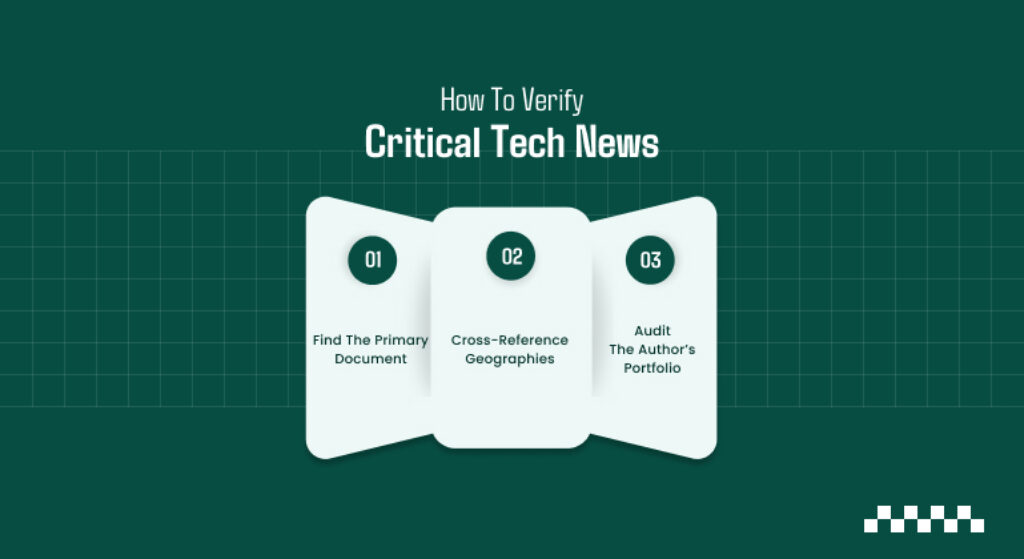
Never rely on summary blocks when skimming tech news that could affect your business, security, or finances. These summaries can easily mislead you.
Instead, apply this fast verification procedure to protect your interests:
Find The Primary Document:
Locate the primary document mentioned in the article first. This document could be a whitepaper, a developer patch note, or a court filing. Finding it allows you to verify the core facts right at the source.
Cross-Reference Geographies:
Cross-reference this report against similar tech stories in Europe or Asia. Doing this helps you understand the context of your beat much better.
Audit The Author’s Portfolio:
Study the author’s past writings to ensure that they have proper expertise in the area which they are writing about